When the global pulp and paper industry moves, we report it first — trusted by 10000 subscribers across 85 countries

2,500 Indonesian Paper Mill Workers Face Layoffs Amid Ownership Dispute
PAPER INDUSTRY NEWS
Jino John
1/30/20261 min read
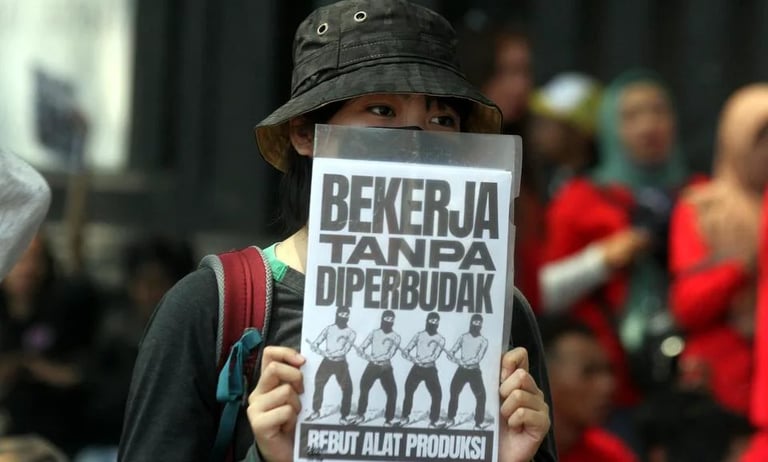
Around 2,500 workers at PT Pabrik Kertas Indonesia, known as Pakerin, in Mojokerto, East Java, confront mass layoffs following the company's closure. The shutdown arises from an ownership dispute that has led to three months of unpaid wages. Said Iqbal, President of the Confederation of Indonesian Trade Unions (KSPI) and the Labor Party, noted that PT Pakerin maintains sound business operations. However, a family ownership conflict has frozen operational funds. "The PT Pakerin paper factory is actually healthy. However, due to an ownership conflict between families, the company cannot draw down funds for operations. As a result, the factory is not operating, and workers are threatened with layoffs," Said Iqbal stated on Monday, January 26.
Workers learned that PT Pakerin's funds, totaling approximately Rp1 trillion at Bank Prima, remain inaccessible for operations. "The funds cannot be withdrawn for company operations. Workers haven't been paid for three months, and the factory isn't operating," Said added. Bank Prima, formerly a depository bank, now operates as a Rural Credit Bank (BPR) under Deposit Insurance Corporation (LPS) supervision, complicating access further.
PT Pakerin's operational permit was revoked by the Ministry of Law and Human Rights in the prior administration, despite a Supreme Court ruling allowing resumption. "This must be revoked in accordance with the Supreme Court's decision so the factory can reopen," Said urged. The situation jeopardizes workers' employment status and wage payments. Said warned of a potential repeat of the Sritex mass layoffs, where workers suffered most despite government assurances.
KSPI has urged President Prabowo Subianto to intervene directly. Restoring access to company funds would enable operations to resume, ensuring worker employment, wage payments, and layoff prevention. "Return the company owners' money so the company can thrive again. If the company thrives, workers will be employed, wages will be paid, and layoffs can be prevented," Said concluded.