When the global pulp and paper industry moves, we report it first — trusted by 10000 subscribers across 85 countries

Brazil and Latin America Adjust Tissue Business in 2026 Targeting Costs and Efficiency
PAPER INDUSTRY NEWS
Jino John
2/27/20261 min read
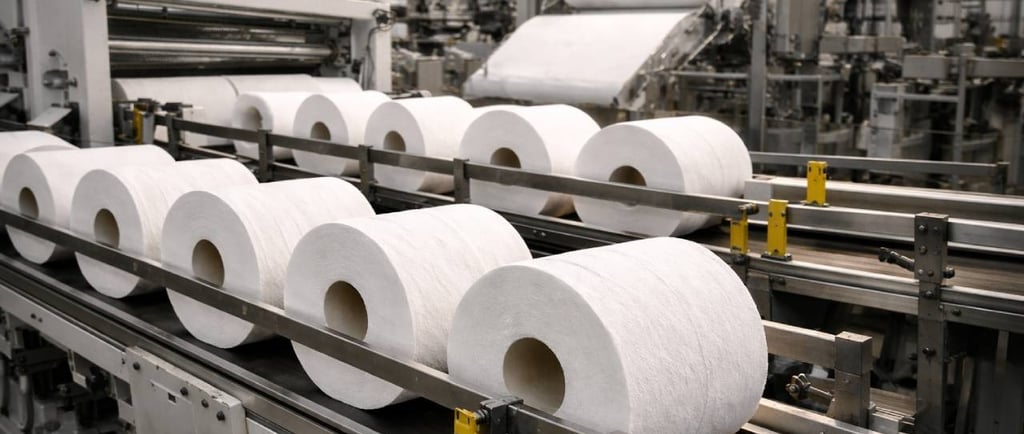
The tissue paper market in Brazil and Latin America is projected to experience moderate growth by 2026, driven by increased cost pressures and the consolidation of trends following several years of expansion and industrial investment. In this new cycle, operational efficiency, commercial discipline, and strategic planning will solidify as key factors for maintaining regional competitiveness.
Industry projections indicate that the year will not be marked by abrupt disruptions, but rather by the intensification of existing market trends. In this context, companies are prioritizing cost control, product portfolio optimization, and more precise sales execution, within a stable but increasingly demanding market environment.
One of the main challenges stems from input costs. The price of BEKP pulp, a key raw material for tissue manufacturing, is expected to remain high through 2026, creating a more rigid cost structure and limiting manufacturers' pricing flexibility.
Sectoral analyses and reports from Fitch Ratings and Fastmarkets agree that the regional market will tend to stabilize after a cycle of strong expansion, in a scenario of moderate economic growth and greater installed capacity.
On the commercial front, the growth of the wholesale channel and the increasing importance of private label brands continue to gain market share, especially in Brazil. This trend expands the available supply but also increases pressure on margins, forcing producers to balance volume strategies with higher value-added offerings.
In this context, operational efficiency, a well-defined portfolio, and the development of strategic alliances emerge as key elements for maintaining competitiveness. The sector's focus is shifting from rapid expansion to optimizing structures, managing costs, and adapting to a more intensely competitive environment.