When the global pulp and paper industry moves, we report it first — trusted by 10000 subscribers across 85 countries

Grupo Corporativo Papelera Expands into U.S. with Private Label Tissue Strategy
PAPER INDUSTRY NEWS
Jino John
5/2/20261 min read

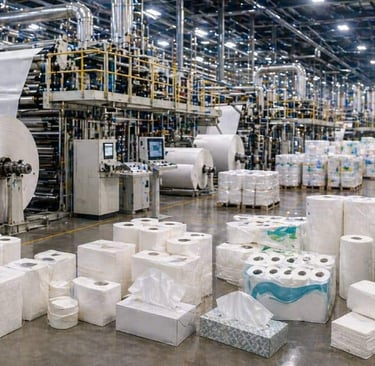
Mexico-based Grupo Corporativo Papelera is advancing its expansion into the United States, leveraging a private label-focused business model as demand for retailer-branded tissue products continues to grow across North America.
Speaking at Tissue World Miami 2026, CEO Eduardo Soto Zanetta outlined the company’s strategic shift following a near-insolvency crisis in 2021. The downturn was driven by market overcapacity, excess post-pandemic inventories, and rising pulp and energy costs, prompting a restructuring of operations and governance.
Grupo Corporativo Papelera currently holds a 39% share of Mexico’s private label tissue market, supplying major retailers including Walmart, Costco, and Sam’s Club. The company operates three facilities in the State of Mexico with a combined capacity of approximately 180,000 metric tons per year, generating about $440 million in annual revenue and employing around 1,600 people.
The U.S. tissue market presents further opportunity, with private label penetration at roughly 35% and domestic supply falling short of demand, requiring imports of nearly one million metric tons annually. In response, the company is pursuing a localization strategy aimed at integrating directly into retailer supply chains rather than exporting finished products.
Grupo Corporativo Papelera has operated a converting facility in Houston for the past four years and is currently constructing a second plant in New Caney, Texas. The new site will include two paper machines and is intended to support customers on both sides of the U.S.-Mexico border while improving logistics efficiency.
Since 2021, the company has introduced formal corporate governance measures, including independent board members, tighter investment controls, and a strengthened leadership team. Expansion plans are now aligned with confirmed customer demand, with new capacity distributed between Mexico and Texas.
The move reflects a broader regional shift toward private label tissue, with manufacturers increasingly focusing on long-term partnerships with major retailers and operational efficiency rather than price-driven competition.