When the global pulp and paper industry moves, we report it first — trusted by 10000 subscribers across 85 countries

New Wave of South American Pulp Projects Could Reach R$109 Billion in Investments
PAPER INDUSTRY NEWS
Jino John
3/17/20261 min read

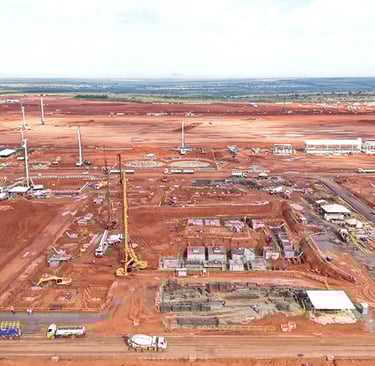
A new wave of pulp industry investments across South America could total up to R$109 billion, highlighting the region’s growing role as a global hub for low-cost, large-scale pulp production.
Following the completion of major projects such as the Cerrado pulp mill developed by Suzano in Brazil, companies across Brazil, Chile and Paraguay are evaluating additional large-scale projects that could significantly expand regional production capacity.
The pipeline of projects reflects strong global demand for eucalyptus pulp, widely used in tissue, packaging and paper products. South America has emerged as one of the most competitive regions for pulp production due to favorable climate conditions, fast-growing plantations and relatively low production costs.
Several industry players are exploring new investments. Chilean forestry group Celulosa Arauco y Constitución (Arauco) and Chile’s Empresas CMPC are among companies considering expansion projects, while Brazil remains the primary destination for new capacity.
One example is CMPC’s Natureza project in Brazil’s Rio Grande do Sul state, which is expected to produce around 2.5 million tonnes of bleached eucalyptus pulp annually once operational. Construction is expected to begin after regulatory approvals, with start-up targeted later in the decade.
The potential investment surge also reflects growing competition among pulp producers to secure market share in Asia and Europe, where demand for sustainable fiber-based materials is increasing. With abundant land resources and favorable growing conditions, Latin America continues to attract global investors seeking efficient and scalable pulp production.
If the planned projects move forward, the estimated R$109 billion in new investments would reinforce South America’s position as a strategic supplier of market pulp and could reshape the global pulp supply landscape over the next decade.