When the global pulp and paper industry moves, we report it first — trusted by 10000 subscribers across 85 countries

Paraibuna Embalagens Enhances Packaging Paper Strength with Updated Specifications
PAPER INDUSTRY NEWS
Jino John
4/7/20261 min read

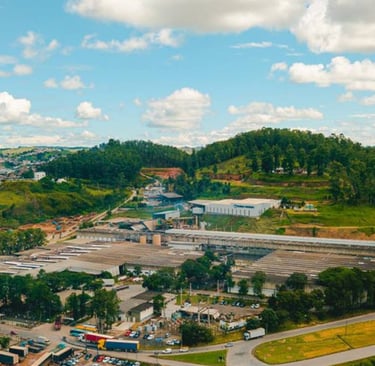
Paraibuna Embalagens has updated its paper specification standards to improve the physical performance of its packaging papers, with a particular focus on increasing resistance to the Ring Crush Test (RCT), a key metric for corrugated cardboard applications.
The initiative targets multiple product lines produced at the company’s Paper Division in Juiz de Fora, including White Top Liner (WTL), Test Liner, and Core Liner grades. The upgrades are designed to enhance the structural integrity of corrugated packaging while optimizing raw material use.
According to Quality Control Coordinator André Domingues, the improvements strengthen the final performance of packaging. “In some cases, such as with 110-size paper, if used in all layers of the packaging, the increase can represent up to a 7.3% gain in box strength,” he said.
The company reported increased RCT values across several basis weights. Core Liner grades saw enhancements at 110, 120, 125, and 130 gsm, while Test Liner improvements were applied to 110 and 130 gsm. WTL grades at 140 and 170 gsm were also upgraded, maintaining visual and print quality while improving strength.
Higher RCT performance contributes directly to better Box Compression Test (BCT) results, improving stacking strength and durability during transport and storage. The company noted that the changes enable stronger packaging without increasing material weight, supporting both cost efficiency and sustainability.
The improvements were supported by technological upgrades, including the use of double-forming systems on Machines 7 and 8, polyurethane presses to improve paper stability, and optimized starch application processes. New specification tables were released in February for both domestic and export markets.
Paraibuna Embalagens is also advancing further process control with the construction of an enzymatic starch kitchen, expected to begin operations in the first half of 2026.
Commercial Manager Mário Henrique Santos said the initiative aligns with global trends toward reducing basis weight while improving performance, enabling box manufacturers to enhance packaging strength while lowering material and transport costs.