When the global pulp and paper industry moves, we report it first — trusted by 10000 subscribers across 85 countries

Umka Carton Mill Boosts Capacity 70% via Valmet Modernizations in Serbia
PAPER INDUSTRY NEWS
Jino John
11/29/20254 min read
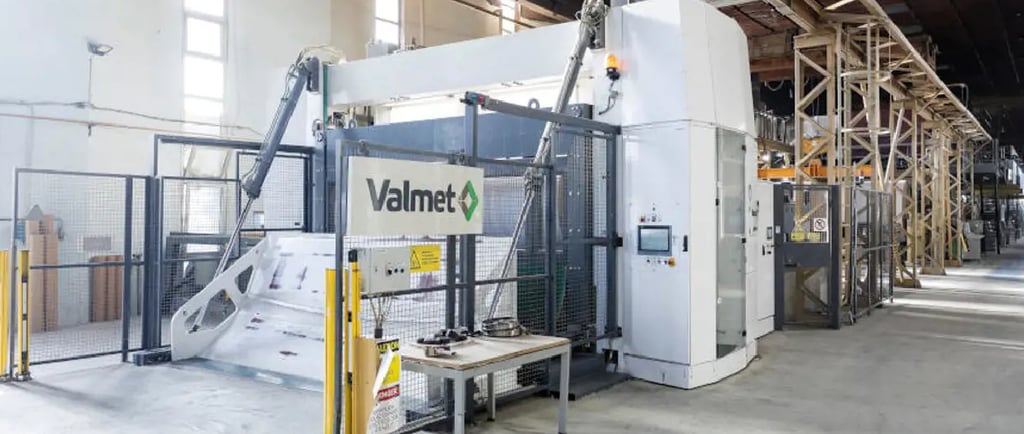
The Umka cardboard factory is a family-owned company and part of the Kappa Star group, with a long history in paper manufacturing. Located in Umka, Serbia, the factory currently produces 220,000 tons annually of coated duplex cardboard, with basis weights ranging from 210 to 450 grams per square meter. The entire volume is produced using an equivalent amount of recycled paper. Approximately 70% of production is destined for the food packaging sector, while the remaining 30% serves the pharmaceutical, hygiene, automotive, and toy industries.
In 2019, the company reached a decision point, facing two alternatives: maintain operations with outdated technology and an annual capacity of 130,000 tons, or invest in modernization, increase productivity, and conquer new markets. Umka opted for investment and began searching for solutions.
The main objective of the investments was to expand production capacity and improve paper quality. Valmet was chosen as the main supplier for three major modernization projects. Alongside the investments, the company also improved its internal efficiency, both commercially and operationally.
“One month after the first modernization, we already achieved the best results in Umka's history. Four years later, we increased capacity by almost 70%,” says Saša Dobrić, Operations Director at Umka.
“Today we serve more than 40 European markets. We have expanded projects with existing clients and opened new business fronts, winning new clients, markets and niches,” adds Nikola Pejović, CEO of Umka.
THREE MAJOR MODERNIZATION PROJECTS
The first and largest project went into operation in 2021, in the midst of the Covid-19 pandemic. The main changes included three new headboxes , a hybrid forming section with multiple formers, a new curtain application system, and a new rewinder.
“We are guided by the principle that the potential supplier must meet our requirements, both in terms of providing the best possible technology and being reliable – not only during the project phase, but also in the coming years and decades,” explains Dobrić.
The restrictions imposed by the pandemic affected the project from the start. All engineering meetings and even the Factory Acceptance Test (FAT) were conducted online . “In the end, we managed to proceed and prepare everything on time. The reconstruction itself was completed in 90 days, exactly as planned, without a single day of delay,” says Dobrić. “The second jumbo reel produced was already ready for sale.”
Based on the positive experiences – from negotiation to engineering, start-up and optimization – Umka decided to maintain the partnership with Valmet in the following two projects. In 2023, a new complete OCC line came online, and in 2024 seven new air dryers for coating were installed.
ENHANCED INVENTORY EFFICIENCY AND QUALITY WITH THE OCC LINE
The new OCC line , with a capacity of 600 tons of dry material per day, has significantly improved production efficiency and pulp quality. Advanced screening technology with 0.15 mm opening baskets ensures exceptionally clean pulp, effectively removing impurities.
“The OCC line is a proven and truly adjustable technology throughout the entire process. Our best experience is in the low-consistency scrubbing system, which intensely removes sand and other impurities, benefiting rotors, screens, and all subsequent equipment,” said Uroš Mančić, Production Director at Umka. “Today, both the stock preparation and the wet end of the machine are supplied by the same vendor,” he added.
Valmet also modernized its DIP line, installing new fine and coarse screening systems, as well as a new scrubber system.
Cutting-edge technologies further enhance quality.
The wet section features three OptiFlo Fourdrinier headboxes , which have improved stability, performance, and board quality. “The main benefit is the basis weight cross-section. Previously, the 2-sigma values ranged between three and five grams per square meter. Now they are below 1.5, thanks to the Valmet dilution system,” explains Mančić.
The old air knife coater was replaced by the highly automated OptiCoat Layer curtain coating station. “It distributes the coating evenly across the entire width of the coil and has reduced breakages in that part of the machine by up to 30%,” says Mančić.
In the most recent modernization, the old air and infrared dryers were replaced by the new OptiDry Coat. Even though it is a new technology for the Umka factory, it has already allowed for increased speed and greater operational stability, as well as reduced fire risks.
The new rewinder was the starting point for the entire investment program. “We were looking for a fully automated machine with the best performance on the market,” explains Mančić. “We recognized the Valmet OptiWin Drum double-drum winder as the best solution available on the market.”
FAST START-UP WITH AUTOMATION
To achieve Umka's objectives, Valmet supplied the Valmet DNA Automation System with the Valmet Performance Center. According to the company, despite initial resistance, the adoption of the new system was surprisingly positive.
“As automation manager, during the project negotiation phase, I strongly opposed acquiring a new automation system for our factory – my main concern was how it would integrate with our existing systems,” says Miloš Stanković, Project Manager at the Umka Plant. “But, during the start-up phase , I was pleased that we accepted Valmet’s suggestion to acquire and install Valmet DNA, as it provided us with the fastest start-up we could have hoped for such a large-scale refurbishment of a cardboard machine.”
Stanković is particularly pleased that all Valmet DNA data can be consulted historically, showing the values as they were at the time. The system has proven reliable, and any ideas for improvement have been implemented quickly. According to Umka, Valmet's support during and after implementation has been top-notch.
HIGH QUALITY AND GOOD COOPERATION
All three reconstructions met the investment targets. The Umka unit increased its annual production capacity from 130,000 to 220,000 tons and significantly improved paper quality.
“Our final product offers far superior printing properties. With this level of quality, we can meet the demanding expectations of the market and our customers throughout Europe,” says Dobrić. “The decision to partner with Valmet on such a large project was the right one, and we look forward to expanding this collaboration in the future,” he concluded.