When the global pulp and paper industry moves, we report it first — trusted by 10000 subscribers across 85 countries
Hungary Enforces Ban on Single-Use Plastic Drink Cups Following End of Transition Period
MARKET ANALYSIS
Jino John
7/6/20265 min read
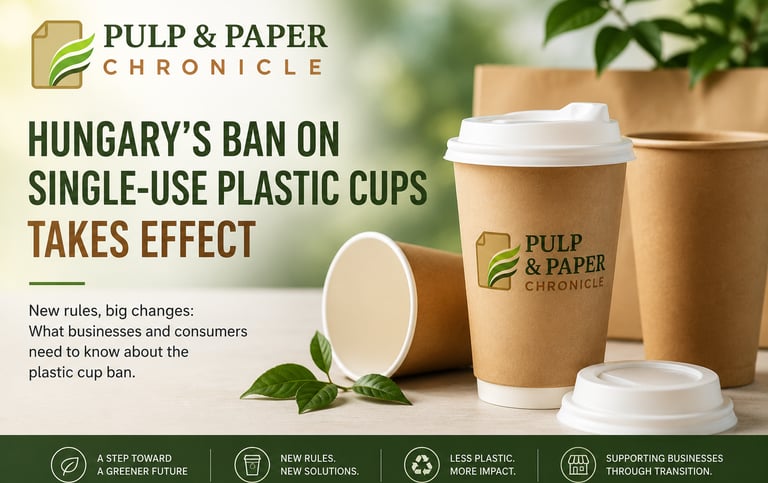
As of July 1, 2026, Hungary has officially banned the sale of most single-use plastic beverage cups, marking a major milestone in the country's efforts to reduce plastic waste and comply with European Union environmental regulations. The new rules affect thousands of businesses, including restaurants, cafés, buffets, festivals, beaches, bars, gas station cafés, and takeaway food outlets that have long relied on disposable cups for serving beverages.
The regulation extends beyond traditional plastic cups. It also prohibits the sale of composite cups containing more than 10% plastic by weight, including many paper cups lined with plastic coatings. Importantly, the ban also covers cup lids, meaning businesses must ensure that their entire beverage packaging system complies with the new standards.
While the legislation was announced years ago and businesses were given a lengthy transition period, its implementation is expected to reshape the hospitality sector and challenge operators during the busiest months of the year.
The End of a Five-Year Transition
Hungary's move is the latest phase of Government Decree 301/2021, introduced to align national legislation with the European Union's Single-Use Plastics Directive (EU Directive 2019/904).
In 2021, Hungary prohibited numerous disposable plastic products, including:
Plastic cutlery
Plates
Straws
Cotton buds
Drink stirrers
Expanded polystyrene food and beverage containers
However, disposable beverage cups received a five-year exemption because replacing them was considered significantly more difficult for the hospitality industry.
That grace period officially ended on June 30, 2026, making July 1 the first day on which non-compliant cups can no longer be placed on the market.
Why Beverage Cups Are Different
Unlike plastic straws or cutlery, beverage cups serve a wide variety of functions. They must safely hold hot and cold liquids, resist leakage, remain durable during transport, and often accommodate secure lids for takeaway service.
For years, polypropylene plastic cups and polyethylene-coated paper cups have been the industry standard because they combine affordability with functionality.
Replacing them has proven considerably more complicated than many policymakers initially anticipated.
Industry Concerns Over the New Rules
Before the regulation took effect, the Hungarian Catering Industry Association (MVI) repeatedly expressed concerns regarding the practicality of the ban.
Industry representatives argued that many available alternatives are either:
More expensive
Less durable
Unsuitable for certain beverages
Difficult to source in sufficient quantities
The association proposed several measures, including:
Extending the transition period by three to five years
Exempting polypropylene cups
Allowing continued use of polyethylene-coated paper cups
Although these proposals were not fully accepted, the government introduced a compromise by allowing cups containing less than 10% plastic by weight to remain on the market.
Even so, businesses must now carefully verify product specifications before purchasing disposable packaging.
Why "Paper Cups" Are Not Always Plastic-Free
Many consumers assume that paper cups are automatically environmentally friendly.
In reality, most takeaway coffee and soft drink cups contain thin plastic linings that prevent liquids from soaking through the paper.
Under the new legislation, compliance depends not on whether a cup looks like paper, but on how much plastic it contains.
As a result, restaurants and distributors must request material certifications from suppliers instead of relying solely on product descriptions.
Cup Lids Are Also Covered
One often-overlooked aspect of the regulation is that cup lids must also comply.
A compliant cup paired with a non-compliant plastic lid still violates the law.
This creates additional challenges for takeaway coffee shops, fast-food outlets, convenience stores, and catering businesses, all of which rely heavily on secure lids to prevent spills and improve customer convenience.
Businesses must therefore rethink their entire packaging system rather than simply replacing cups.
Operational Challenges for Businesses
The regulation requires restaurants and cafés to do far more than purchase new products.
Businesses must now:
Review all existing inventory
Verify supplier certifications
Replace non-compliant cups and lids
Train employees on the new requirements
Update ordering and storage procedures
Adjust pricing where necessary
Inform customers about packaging changes
For many small businesses, these operational adjustments may prove costly.
Small Businesses Face the Greatest Pressure
Large restaurant chains and national coffee brands generally possess greater purchasing power, legal expertise, and established supply networks.
Smaller operators—including independent cafés, seasonal beach vendors, mobile food stalls, family-run restaurants, and village event organizers—often lack these advantages.
Higher packaging costs, uncertain supply chains, and limited storage capacity could significantly increase operating expenses, especially during the busy summer season when disposable cups are used most frequently.
The Rise of Reusable Solutions
Many businesses are expected to adopt reusable cup systems.
These systems have already become common at major festivals and large public events, where visitors pay a refundable deposit for reusable cups.
While environmentally beneficial, reusable systems require substantial infrastructure, including:
Washing facilities
Sanitation procedures
Collection systems
Storage space
Additional staff
Deposit management
Such systems are practical for large venues but may be difficult for smaller businesses to implement.
Moreover, reusable cups only provide environmental benefits if customers actually return them for reuse.
Environmental Benefits Remain the Primary Goal
The legislation ultimately aims to reduce the environmental impact of single-use plastics.
Disposable beverage cups generate enormous volumes of waste every year, particularly at festivals, beaches, tourist destinations, and takeaway food outlets.
Plastic waste frequently ends up in rivers, lakes, forests, and public spaces, where it can persist for decades before breaking down into harmful microplastics.
By encouraging reusable alternatives and limiting plastic content, policymakers hope to significantly reduce pollution and promote more sustainable consumption habits.
What Consumers Can Expect
Customers will likely notice gradual changes rather than an overnight transformation.
Some of the most visible changes may include:
Different cup materials
Deposit-based reusable cup systems
Slightly higher beverage prices
Encouragement to bring reusable mugs or bottles
New return procedures at festivals and events
Some cafés may also offer incentives for customers who bring reusable cups, subject to food safety regulations.
Although the transition may initially create confusion, consumer habits are expected to evolve alongside the new packaging standards.
Suppliers Play a Critical Role
Packaging manufacturers and distributors now carry greater responsibility than ever before.
Businesses will increasingly demand clear documentation showing that products comply with the legal plastic-content threshold.
Suppliers capable of delivering affordable, compliant, and practical packaging solutions are likely to gain a competitive advantage, while those unable to adapt may lose significant market share.
Compliance Is Essential
Businesses found selling non-compliant products may face regulatory action under Hungary's waste management and environmental laws.
To minimize risk, operators should:
Request written compliance certificates from suppliers
Maintain accurate purchasing records
Regularly review packaging specifications
Ensure staff understand the applicable regulations
Careful documentation will be essential in demonstrating compliance during inspections.
Balancing Sustainability and Practicality
Hungary's plastic cup ban represents an important environmental milestone, but it also highlights the challenges of implementing sustainability policies in sectors that depend on practical, affordable packaging.
The hospitality industry broadly supports reducing plastic waste. However, many operators argue that affordable alternatives capable of matching the performance of traditional plastic cups are still limited.
Whether the new rules achieve their environmental objectives without placing excessive financial pressure on businesses will become clearer over the coming months.
Looking Ahead
July 1, 2026, marks a turning point for Hungary's hospitality industry. The era of conventional single-use plastic beverage cups is ending, and businesses must now embrace new packaging standards designed to reduce environmental impact.
Success will depend on cooperation among government authorities, suppliers, restaurants, and consumers alike.
While the transition may present short-term challenges—including increased costs, operational adjustments, and changing consumer expectations—it also creates an opportunity to accelerate the adoption of more sustainable practices.
The coming months will reveal how quickly the market adapts, how effectively alternative packaging solutions meet industry needs, and whether Hungary's ambitious environmental policy can become a successful model for reducing single-use plastic waste.