When the global pulp and paper industry moves, we report it first — trusted by 10000 subscribers across 85 countries

Mercer International Releases 2025 Sustainability Report Highlighting “Resilience in Action”
PAPER INDUSTRY NEWS
Jino John
5/27/20262 min read
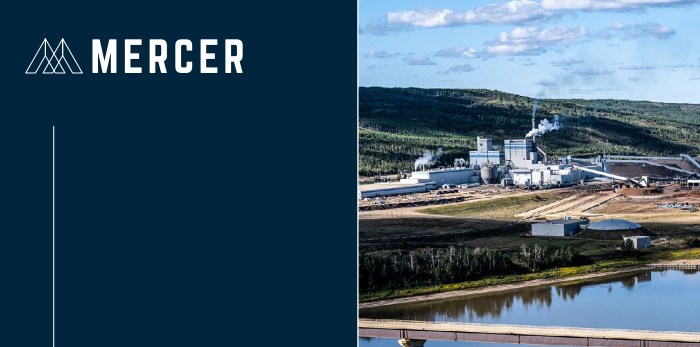
Mercer International Inc. today released its 2025 Sustainability Report, titled “Resilience in Action,” outlining the company’s continued progress in environmental stewardship, operational efficiency, innovation, employee engagement, and long-term sustainable growth.
The report highlights Mercer’s strategy to integrate sustainability directly into business performance while advancing climate action, responsible forestry, renewable bio-based products, and resilient operations across Canada, Germany, and the United States.
Key 2025 Highlights
Among the major achievements outlined in the report:
Achieved an 11% reduction in Scope 1 greenhouse gas emissions compared to 2024 through operational efficiencies and reliability improvements.
Maintained 100% responsible fiber sourcing across operations.
Sustained 100% certification of Mercer-managed forests to the SFI® Forest Management Standard.
Reached 85% renewable energy usage across global operations.
Assessed 100% of suppliers for social and environmental risks.
Continued expansion of mass timber solutions supporting sustainable construction across North America.
Advanced pilot projects in carbon capture and lignin innovation to support the transition toward next-generation biorefineries.
Leadership Commentary
“Our theme this year, ‘Resilience in Action,’ reflects our belief that sustainability is not a cost center — it is a driver of enduring competitiveness and financial health,” said Juan Carlos Bueno, President and Chief Executive Officer of Mercer International. “Even in challenging market conditions, we continue investing in operational efficiency, innovation, and low-carbon solutions that strengthen our long-term resilience.”
Bill Adams, Chief Sustainability Officer and Senior Vice President, Canadian Pulp Operations, added:
“In a challenging year, we have proven that sustainability remains our competitive advantage. Through emissions reductions, climate innovation, water stewardship, and responsible forest management, we continue creating scalable solutions that support a more sustainable world.”
Driving Innovation Through the Circular Bioeconomy
Mercer continues transforming its operations beyond traditional pulp production toward a diversified biorefinery model focused on maximizing the value of renewable forest resources.
Key innovation initiatives include:
Bioenergy with Carbon Capture and Storage (BECCS): Mercer’s Peace River pilot project aims to create pathways toward net-negative emissions while exploring carbon credit opportunities.
Lignin Development: Mercer Rosenthal’s lignin extraction initiative supports renewable alternatives for industrial applications such as bio-based resins, foams, and asphalt substitutes.
Mass Timber Growth: Mercer Mass Timber continues delivering Cross-Laminated Timber (CLT) and Glulam solutions that help reduce embodied carbon in construction while improving building efficiency and performance.
Commitment to Responsible Forestry and Biodiversity
Mercer emphasized its long-standing commitment to sustainable forest management and biodiversity conservation. The company manages approximately 7.3 million hectares of land tenure in Alberta, Canada, guided by ecosystem-based management principles and science-driven forestry practices.
In 2025, Mercer also:
Joined the International Sustainable Forestry Coalition (ISFC) to advance global sustainable forestry collaboration.
Continued participation in major biodiversity and climate adaptation initiatives, including the EMEND Project and the DIVERSE Project.
Expanded precision forestry capabilities using advanced LiDAR technology to improve operational efficiency and environmental stewardship.
Global Operations
Mercer operates:
9 production sites
Employs approximately 3,545 people globally
Generated $1.868 billion in 2025 revenue
The company’s operations span Canada, Germany, and the United States and include pulp mills, sawmills, mass timber facilities, bioenergy operations, and logistics services.