When the global pulp and paper industry moves, we report it first — trusted by 11,000+ subscribers across 85 countries
Nippon Dynawave Report Reveals Technical Response to Catastrophic Longview White Liquor Spill
PAPER INDUSTRY NEWS
Jino John
7/24/20263 min read
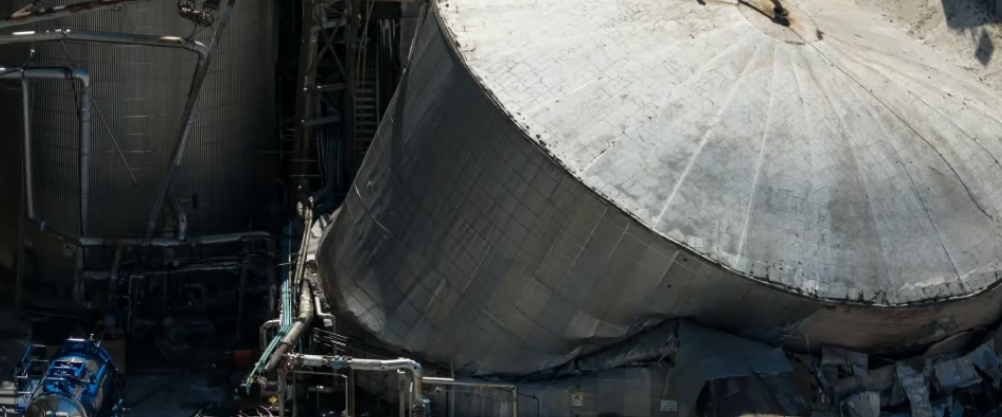
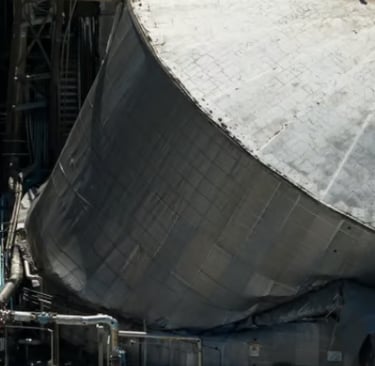
Newly released documents submitted by Nippon Dynawave Packaging to the Washington Department of Ecology provide the most detailed technical account to date of how operators responded to the May 26 collapse of the company's G-Tank, outlining difficult operational decisions that sought to limit environmental damage while managing one of Washington state's worst industrial disasters.
The report states that the white liquor storage tank failed at approximately 7:15 a.m., releasing an estimated 900,000 gallons of caustic pulping liquor containing approximately 680,000 pounds of sodium hydroxide (NaOH). White liquor, a key kraft pulping chemical composed primarily of sodium hydroxide, sodium sulfide and sodium carbonate, is classified under Washington regulations as corrosive (D002), reactive (D003) and state-only toxic (WT02) dangerous waste. The tank failure also ruptured a nearby fire main, increasing the total volume of liquid released and expanding the flooded area.
According to the report, operators immediately established a unified incident command and diverted wastewater influent to the mill's West Pond to protect the wastewater treatment plant. However, pH alarms at Outfalls 001 and 002 quickly exceeded regulatory limits after white liquor entered the Filter Plant's E-Sump. Operators shut down the sump pumps after discovering elevated conductivity, but doing so caused the sump to overflow, enlarging the flooded area until it reached stormwater drains serving the Central Maintenance parking lot. They subsequently restarted the pumps manually in a controlled manner to reduce stormwater contamination while attempting to keep pH excursions below permit limits.
The report documents nine elevated-pH events at the permitted outfalls over May 26-27. The highest readings reached pH 12.8 at Outfall 001 and pH 12.6 at Outfall 002, with the longest excursion lasting 63 minutes. Additional spikes of pH 11.7, 11.4, 10.6 and 10.4 were recorded while operators adjusted pump operations and cleaned contaminated drainage systems.
Nippon estimates that approximately 3,500 gallons of pure white liquor, containing about 2,650 pounds of sodium hydroxide, reached the Columbia River through Outfalls 001 and 002 during periods when pH exceeded 10.0 standard units. Mitigation efforts included manual pump control, vacuum trucks, temporary pumping systems and routing contaminated water back to the wastewater treatment plant.
The report further reveals that flooding reached Stormwater Outfall 011, discharging contaminated runoff into CDID1 Ditch No. 5 beginning around 9:15 a.m. on May 26. Field measurements recorded pH 12.8 in the ditch discharge that afternoon and pH 12.1 on May 29 before flow was progressively isolated. Nippon estimates that up to 160,000 gallons of white liquor, containing approximately 120,000 pounds of sodium hydroxide, entered the ditch. Environmental staff immediately notified the Consolidated Diking Improvement District and requested that pumps to the Columbia River be shut down.
Engineers employed multiple containment measures over the following days, including inflatable pipe plugs, gravel barriers, temporary submersible pumps, vacuum trucks and ultimately a concrete plug installed in Outfall 011 on June 2 to isolate the drainage system. A subsequent dye test confirmed the remaining seepage measured pH 7.5, indicating neutral conditions and successful isolation from Ditch No. 5. By June 9, pH throughout the northern drainage ditch had stabilized between 7 and 8, although cleanup crews continued removing isolated areas measuring above pH 9.0.
The spill also contaminated approximately 12 acres of the mill site, including an estimated 7 acres of unpaved ground or pavement believed to have been compromised. Major affected areas included the Filter Plant complex, the Pulp Dryer Line area, rail access to the warehouse and the courtyard surrounding the failed tank. An impact map attached to the report illustrates the extent of flooding, stormwater pathways and areas where contaminants reached soil.
As of June 23, Nippon reported that most affected areas had undergone initial cleanup using vacuum recovery, pumping, street sweeping, neutralization and decontamination. The courtyard surrounding the failed tank remains a controlled exclusion zone pending completion of investigations by the U.S. Chemical Safety Board and Washington State Department of Labor & Industries, after which final neutralization and decontamination will be completed.
The report provides the first comprehensive technical explanation of how operators balanced competing priorities during the emergency—protecting the wastewater treatment plant, limiting high-pH discharges to the Columbia River, preventing further stormwater releases and containing widespread flooding—while responding to a catastrophic tank failure that ultimately claimed 11 lives and triggered multiple state and federal investigations.