When the global pulp and paper industry moves, we report it first — trusted by 10000 subscribers across 85 countries
Papyrus Australia Secures Mining Sector Contract as Banana Fibre Technology Moves Toward Commercialisation
PAPER INDUSTRY NEWS
Jino John
4/29/20262 min read
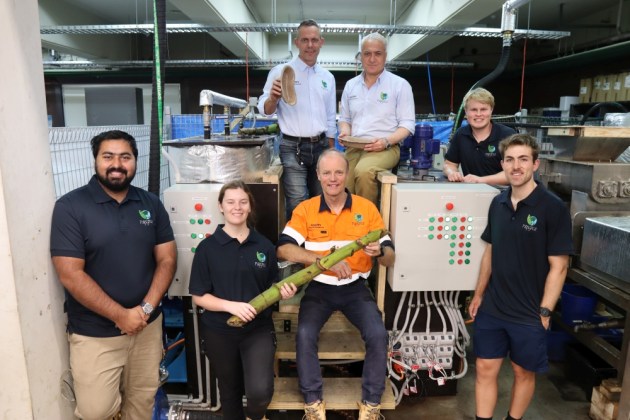
Papyrus Australia is advancing the commercialisation of its proprietary banana fibre technology, positioning agricultural waste as a feedstock for paper, board and packaging applications, with its first multimillion-dollar contract secured in the mining sector.
The patented technology converts discarded banana plant material—including stems, stalks and leaves—into a durable fibre suitable for packaging formats, food containers, trays and moulded products. The company is also developing the material as an alternative to expanded polystyrene.
Rather than operating solely as a manufacturer, Papyrus is pursuing a collaborative model, working with growers, converters and manufacturers to accelerate adoption of banana fibre across the packaging value chain.
The development targets a significant agricultural waste stream. Australia’s banana industry generates thousands of tonnes of organic waste annually, much of which decomposes in fields and contributes to methane emissions. Papyrus aims to convert this waste into a value-added fibre resource within a circular economy framework.
Chaired by Al Jawhari, the company received a $250,000 matched grant under the Industry Growth Program to support early-stage commercialisation. The funding enabled the establishment of a rapid prototyping and R&D facility at The University of Adelaide, intended to serve as a hub for industry collaboration.
Chief executive Daniel Schmidt said the material’s durability and low-impact processing make it suitable for multiple sectors, including food packaging and medical applications.
Papyrus has secured a $4.2 million agreement with TBS Mining Solutions Pty Ltd, part of Aquirian Limited, to supply a biodegradable version of a plastic “collar keeper” used in blast mining operations.
The contract, with an initial term of 3.5 years, establishes Papyrus as the exclusive global producer of the biodegradable collar keeper variant and provides a defined pathway to revenue. According to the company, the application demonstrates the fibre’s durability beyond traditional packaging uses.
Papyrus is now establishing a production facility in Adelaide to support scale-up and transition from R&D to commercial output. The site is expected to produce pulp for moulded products, paper and board applications.
The company’s approach reflects growing interest in agricultural residues as feedstock for fibre-based materials, particularly as industries seek circular and lower-emissions alternatives.