When the global pulp and paper industry moves, we report it first — trusted by 10000 subscribers across 85 countries
UPM Adhesive Materials Publishes Climate Review 2025, Highlighting Strong Progress Toward 2030 Climate Goals
PAPER INDUSTRY NEWS
Jino John
6/15/20264 min read
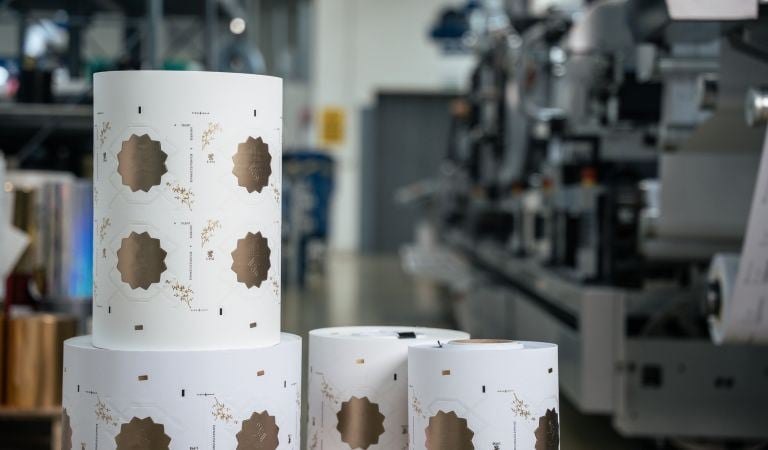
UPM Adhesive Materials today published its Climate Review 2025, outlining significant progress toward its 2030 climate targets and demonstrating how sustainability initiatives are creating measurable value across the label materials, graphics solutions and specialty tapes businesses.
The review highlights achievements across forests and land stewardship, emissions reductions, circular economy solutions, sustainable product development and customer sustainability services.
“We are helping customers navigate rapidly evolving sustainability expectations, increasing reporting requirements and changing regulations by providing credible environmental data, innovative products and practical solutions,” said Tim Kirchen, Executive Vice President, UPM Adhesive Materials. “The progress outlined in this report reflects the commitment of our employees, customers, suppliers and partners to advancing climate action throughout the value chain.”
MAJOR CLIMATE AND SUSTAINABILITY ACHIEVEMENTS
100% Certified Paper Sourcing Achieved Ahead of Schedule
UPM Adhesive Materials reached its 2030 target of sourcing 100% certified paper raw materials six years ahead of schedule. During 2024 and 2025, all purchased paper raw materials were certified under credible third-party forest certification schemes. The company maintains both FSC™ (FSC C012530) and PEFC (PEFC/02-31-196) Chain of Custody certifications, reinforcing its commitment to responsible sourcing, supply chain transparency and sustainable forest management.
Supporting Nature Through Wetland Restoration
As part of its 14-year collaboration with WWF Poland, UPM Adhesive Materials continues supporting biodiversity and climate resilience through wetland restoration projects. With UPM’s support, WWF Poland has acquired nearly 100 hectares across eleven locations together with six local partners. In 2025, restoration efforts focused on hydrological analyses, habitat protection and conservation activities aimed at restoring critical wetland ecosystems and protecting threatened species.
Progress Toward Science-Based Emissions Targets
UPM Adhesive Materials continues to support UPM Group’s Science Based Targets initiative (SBTi)-approved climate targets and its commitment to achieving net-zero emissions in line with a 1.5°C pathway by 2050 at the latest through the UN Forward Faster Initiative.
The company reported significant progress toward its Scope 1 and Scope 2 emissions reduction target, achieving a 58% reduction in emissions intensity per million square meters produced compared with its 2015 baseline. The 2030 target is a 65% reduction.
One example of this progress is the implementation of a new heat recovery system at the Metamark manufacturing facility in Lancaster, United Kingdom. The system recovers thermal energy from production processes and reuses it to heat drying ovens, reducing natural gas consumption by approximately 30% relative to production volume while maintaining product quality and operational efficiency.
Strengthening Scope 3 Emissions Management
UPM Adhesive Materials aims to reduce Scope 3 emissions intensity from raw materials and transportation by 30% by 2030 compared with a 2018 baseline. Current progress stands at a 6% reduction.
During 2025, the company expanded product carbon footprint data collection to all relevant suppliers, significantly increasing primary data coverage for raw materials. The initiative improves emissions transparency, enables more accurate product carbon footprints and helps identify opportunities for greater emissions reductions throughout the value chain.
CUSTOMER-DRIVEN INNOVATION AND CIRCULARITY
Sustainability Integrated Into Product Development
UPM Adhesive Materials introduced a renewed global product development framework that integrates sustainability performance into decision-making from the earliest stages of product development.
Projects are evaluated against commercial and sustainability criteria, including compatibility with packaging recycling streams and measurable reductions in environmental impact compared with existing solutions. Life cycle assessment data is incorporated early in the development process to support evidence-based decisions and deliver verified sustainability benefits to customers.
Expanding Circular Material Solutions
In the Asia-Pacific region, UPM Adhesive Materials completed the transition of all PET liners used in paper label materials to include 30% post-consumer recycled (PCR) content. Initially introduced in Australia’s wine sector, the solution has expanded across the region and demonstrates how circular material choices can become industry standards without compromising quality or performance.
Growing Demand for Sustainable Label Solutions
Driven by evolving regulatory requirements such as the European Union Packaging and Packaging Waste Regulation (PPWR) and the EU Deforestation Regulation (EUDR), demand for sustainable label materials continued to accelerate in 2025.
Sales volumes of the UPM Raflatac™ Carbon Action film labels portfolio increased approximately tenfold compared with 2024, reflecting growing customer demand for scalable solutions that support both environmental and regulatory objectives.
ADVANCED DATA AND SERVICES FOR CUSTOMERS
UPM Label Life Expands Environmental Transparency
UPM Label Life, the company’s life cycle assessment-based environmental data service, continues to help customers make informed material decisions and reduce Scope 3 emissions.
The platform provides 26 environmental metrics covering the full product life cycle, including greenhouse gas emissions, energy demand and water consumption. In 2025, product footprint coverage expanded to approximately 94% of label products by global sales volume, with environmental footprint data now automatically linked to customer quotations.
Scope 3 Reporting Support for Customers
To help customers meet increasing sustainability reporting requirements, UPM Adhesive Materials expanded its Scope 3 reporting services. The reports combine customer purchase data with Label Life product footprint information, providing detailed insights into supply chain emissions and supporting more informed sustainability strategies.
Expanding Release Liner Recycling Through RafCycle™
UPM RafCycle™, established in 2010, continues to help customers transform label release liner waste into new raw materials and products.
With approximately 350 partners across 17 countries, RafCycle provides collection, logistics and recycling services that divert waste from landfill and incineration. In 2025, the company further strengthened the environmental and economic sustainability of the program by optimizing its recycler network and introducing a service fee model designed to support long-term growth.
RafCycle partners also receive verified reporting on recycling volumes and associated carbon dioxide impacts, with assessments validated by DEKRA.
LOOKING AHEAD
While celebrating major achievements, UPM Adhesive Materials acknowledges that reducing value chain emissions remains a significant challenge and priority. The company is refining its climate action plans to incorporate recent acquisitions and operational changes, with updated sustainability priorities and targets expected to be finalized in 2026.
Future efforts will focus on accelerating Scope 3 emissions reductions, advancing circular economy solutions, expanding digital sustainability services, assessing nature impacts and helping customers navigate increasingly complex sustainability requirements.
“Customer needs will continue to guide our sustainability agenda,” said Robert Taylor, Director, Sustainability, UPM Adhesive Materials. “Our goal remains the same: delivering high-performance adhesive materials while helping customers translate sustainability ambitions into practical, impactful and streamlined decisions.”