When the global pulp and paper industry moves, we report it first — trusted by 10000 subscribers across 85 countries
U.S. Chemical Safety Board Begins Investigation Into Fatal Nippon Dynawave Tank Failure
PAPER INDUSTRY NEWS
Jino John
6/26/20262 min read
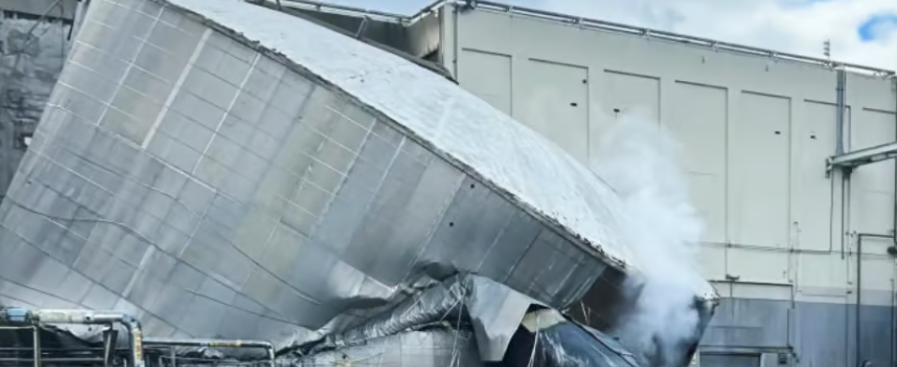
The U.S. Chemical Safety and Hazard Investigation Board (CSB) has begun a detailed investigation into the fatal tank failure at Nippon Dynawave Packaging's Longview paper mill, with a final report expected within 12 to 18 months.
The investigation follows the May 26 rupture of a 900,000-gallon tank containing caustic white liquor, an incident that killed 11 people and injured eight others. According to the CSB, an initial investigative update is expected within three to five months, while four investigators remain on-site conducting interviews and reviewing company records.
The agency said its investigation will focus on four areas: the mechanisms that led to the tank failure, the tank's location within the facility, the mill's maintenance and mechanical integrity programs, and applicable facility, corporate, and industry standards.
The CSB stated that its inquiry is one of three separate investigations underway into the incident. The Washington State Department of Labor and Industries (L&I) is conducting a workplace safety investigation to determine whether safety regulations were violated, while the Washington State Department of Ecology is examining potential violations of environmental permits and state and federal environmental laws.
According to L&I, the agency has conducted six workplace safety inspections at the mill since Nippon Dynawave Packaging acquired the facility in 2016. Two workplace safety cases remained open at the time of the accident. The agency also confirmed that none of those inspections involved the failed 900,000-gallon white liquor tank.
State records indicate that another tank at the facility experienced a valve malfunction earlier in 2026, releasing a scalding liquid that submerged a worker who was not seriously injured while wearing protective equipment. Officials said there is no evidence linking that incident to the May tank failure.
The Department of Ecology said it will also examine whether the accident resulted in environmental impacts. Since 2016, the agency has cited the mill for multiple permit violations, including previous white liquor and black liquor spills.
Unlike state regulatory agencies, the CSB does not issue fines or penalties. Instead, it seeks to identify the root causes of industrial accidents and develop recommendations aimed at preventing similar incidents across the industry. The agency formally launched its investigation on May 27 and said it will work to stabilize the investigation site while determining the factors that contributed to the catastrophic tank failure.